Understand how light shapes our health
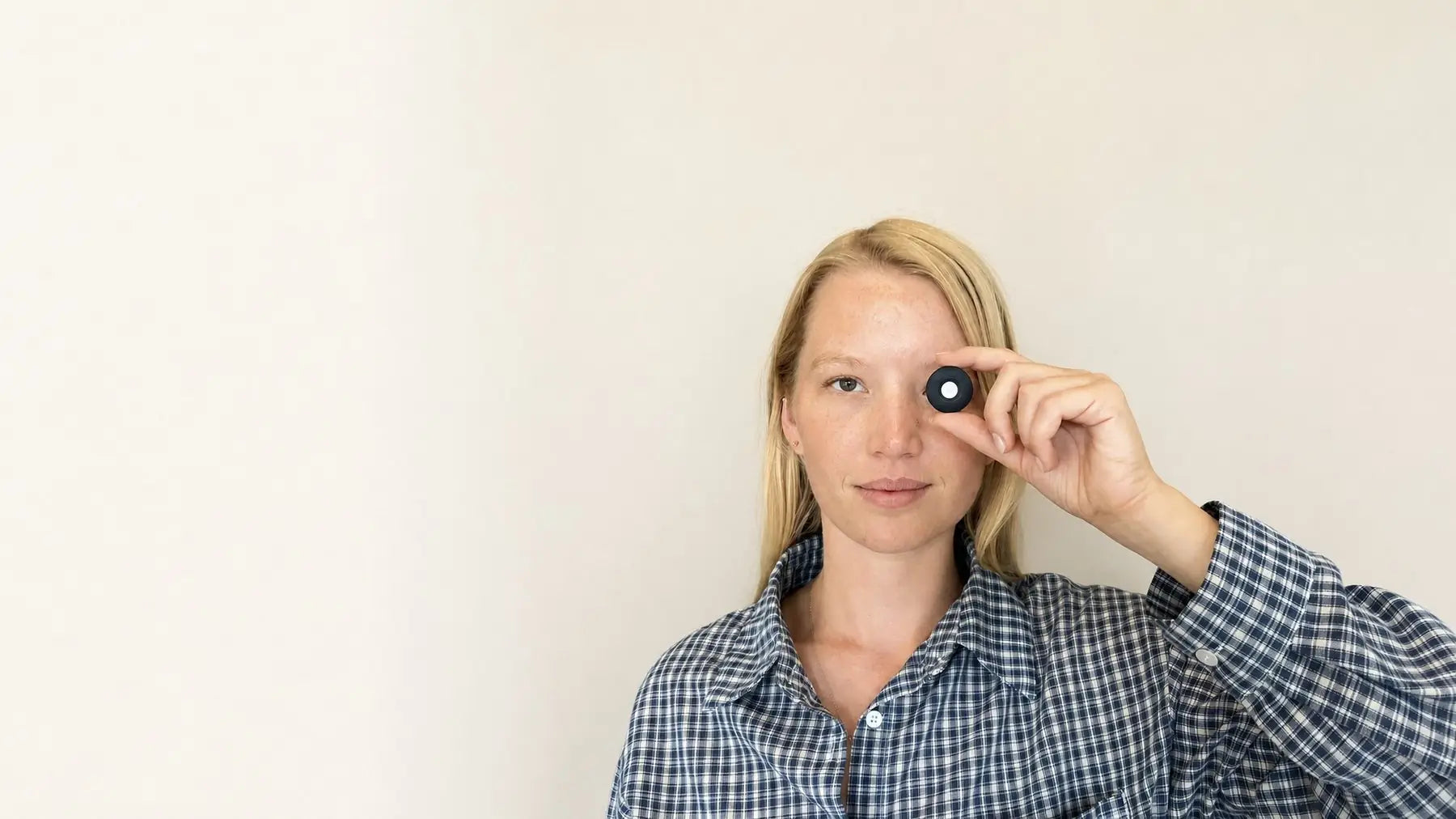
The LYS Button is a wearable sensor that measures personal light exposure, indoors and outdoors, day after day.
Backed by science







Used in published research since 2021, across universities, hospitals and care settings worldwide.
Light is a signal to the body
Its timing, intensity, spectrum and duration influence body clocks, sleep, alertness and comfort, whether it comes from daylight outside or the lighting in the buildings where we spend most of our time.

In our lives
Indoors, even a bright office is far dimmer than a cloudy day outside. In the evening, screens and lamps tell the body it’s still daytime.
In our buildings
Lighting is designed to meet standards and save energy. A room can pass every requirement and still leave people short of the light they need.
In our studies
Research tracks sleep, activity and heart rate, but often not the light that drives them.
What matters about light
Your body clock doesn’t respond to one moment of light. It responds to the pattern, day after day: how much light actually reaches your eyes, its colour, and when it arrives in your circadian rhythm.
When light reaches the eyes across the 24-hour day.
From bright outdoor daylight to dim indoor light.
The mix of wavelengths, including melanopic light.
How long people spend in it, inside and out.
The science has a target. Most of us miss it
In 2022, 18 leading circadian scientists agreed on how much light people need, measured as melanopic EDI: the light your body clock responds to.¹
When researchers measured everyday light, missing these targets was common, and light patterns were linked to later sleep and more daytime sleepiness.² LYS measures the same metric, so you can see whether you, your building or your study participants hit the target.
¹ Brown et al., PLOS Biology, 2022. pubmed.ncbi.nlm.nih.gov/35298459
² PNAS, 2023. pmc.ncbi.nlm.nih.gov/articles/PMC10589638
Measure. Compare. Act
From clip-on to evidence in three steps.
Measure
Clip on the LYS Button. It records the light that reaches each person, all day, over days and weeks.
Compare
See the patterns and the differences: morning vs evening, desk vs window, office vs home, one building vs another, one participant vs the next.
Act
Use the evidence to change a routine, adjust a lighting design or publish your findings.

Choose the device that fits your needs
Two sensors, one platform. Buy single units here, or scale up with a research package. Every product has an instant PDF quote for procurement, so there is no waiting on email.

Light data with activity context
Everyday light data with movement context, in a compact, unobtrusive design.
- Light data
- Red, green, blue and near-infrared (RGB + NIR).
- Movement sensing
- A 3-axis accelerometer adds activity context to light measurements.
- Compact and unobtrusive
- A compact, unobtrusive design for everyday wear.
Specs, best for and apps
- Battery life
- 5 days
- Sampling interval
- Every 15 seconds; custom intervals by arrangement
- On-device storage
- At least 24 hours at the default interval
- Syncing
- Once a day at the default interval
LYS Collect: research data collection, no feedback to participants (iOS and Android)
LYS Data Portal: manage participants, monitor collection and export data

Detailed light sensing with activity context
Adds more detailed spectral information and flicker detection, with the same movement context.
- Detailed spectral data
- Eight visible spectral channels (F1–F8), plus clear and NIR, across approx. 350–1000 nm.
- Flicker detection
- A dedicated flicker-detection channel.
- Movement sensing
- A 3-axis accelerometer adds activity context to light measurements.
Specs, best for and apps
- Battery life
- 7 days
- Sampling interval
- Every 15 seconds; custom intervals by arrangement
- On-device storage
- At least 10 hours at the default interval
- Syncing
- At least every 10 hours at the default interval
LYS Data Portal: manage participants, monitor collection and export data
Running a study? Compare V1 and PRO in detail or see research packages.
Guided by the researchers who defined this field

Prof. Dr. Manuel Spitschan
A world-leading expert on how light shapes human physiology and behaviour: as a stimulus, an exposure and an intervention.
Faculty profile →
Prof. Till Roenneberg
Co-creator of the Munich ChronoType Questionnaire and the researcher who coined "social jetlag", foundational ideas behind light, timing and health.
What the research shows
Peer-reviewed studies have used LYS Buttons to measure the light people actually get, on the pitch, in the office and in care homes.
Higher Levels of Morning and Daytime Light Exposure Associated with Positive Sleep Indices in Professional Team Sport Athletes
Found that greater morning and daytime light exposure was associated with more favourable sleep measures in professional team-sport athletes. LYS Button worn to measure ambient light exposure.
Read the study →The Relationship of Light Exposure to Sleep Outcomes Among Office Workers, Part 1: Working in the Office vs. at Home Pre/Post COVID-19
Compared everyday light exposure and sleep outcomes when office workers worked in the office versus at home, recording personal exposure with a LYS Button.
Read the study →Using Wearable Sensors to Measure and Predict Personal Circadian Lighting Exposure in Nursing Home Residents: Model Development and Validation
Develops and validates a model for predicting personal circadian light exposure from wearable sensor data in nursing home residents, with sensors worn near the shoulder or collar.
Read the study →Light, explained
Short answers to what people ask most. Product and troubleshooting questions live on the Support page.
What does LYS measure?
The light a person actually receives through the day: how much, when, and (with Button PRO) which wavelengths. The Button is worn at the collar or upper chest, so it measures what reaches the eyes rather than what a fixed point in a room gets.
Who uses LYS?
Research teams studying sleep, circadian health, ageing and performance; architects and lighting designers checking whether a space delivers healthy light to the people in it; and individuals who want to track their own light the way they track sleep and steps.
What is the difference between Button V1 and Button PRO?
Button V1 records light with movement context and suits large cohorts, buildings and personal use. Button PRO adds eight spectral channels, clear, near-infrared and flicker detection for clinical and circadian research; both report melanopic EDI. Both work with the same apps and Data Portal.
Do I need to be a researcher to buy one?
No. Single Buttons are sold online to anyone. Research packages, grant support and institutional invoicing are there for study teams that need them.
Where does the data go?
The Button stores measurements on the device until it syncs with a LYS app over Bluetooth. From there, personal data is shown in LYS Track, and study data lands in the LYS Data Portal for export.
A little light in your inbox
New research, practical light-science guides and updates from LYS.